Best Wireless Mechanical Keyboards for Python Developers
Writing clean, bug-free code requires intense mental focus and thousands of repetitive keystrokes every single day. For software engineers, a keyboard isn't just an accessory—it is an absolute extension of their nervous system. Standard office keyboards with mushy membrane switches lead to missed keystrokes, finger fatigue, and a frustrating lack of tactical feedback when running scripts in the terminal. High-end wireless mechanical keyboards fix this bottleneck by offering ultra-precise switch actuations, multi-device cross-platform pairing, and fully open-source firmware remapping to bind complex macros and terminal commands. We tested and reviewed the top mechanical boards engineered to handle rigorous compiling workflows and elevate your daily programming efficiency. Developers who rely heavily on navigation keys might prefer the best wireless TKL keyboards for their workflows. Additionally, maintaining a stable connection is vital during deep coding sessions, so it's helpful to understand the nuances of Bluetooth vs 2.4GHz wireless and know exactly why wireless keyboards keep disconnecting to troubleshoot effectively.
Top Picks at a Glance
- The Ultra-Portable Productivity King: NuPhy Air75 V2
- The Heavyweight Custom Masterpiece: Keychron Q1 Max
- The Sound-Optimized Powerhouse: Epomaker TH80 Pro
1. The Ultra-Portable Productivity King: NuPhy Air75 V2
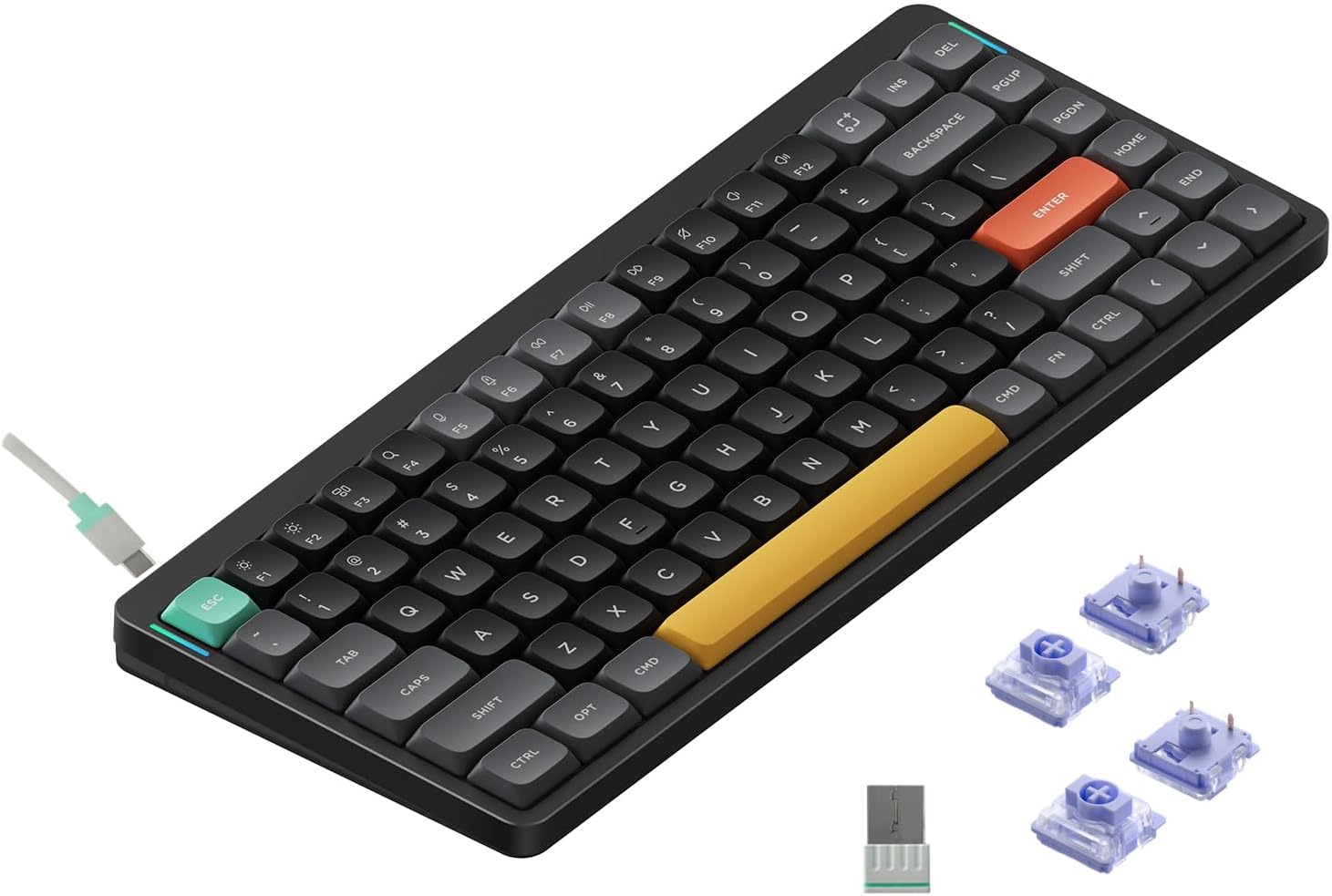
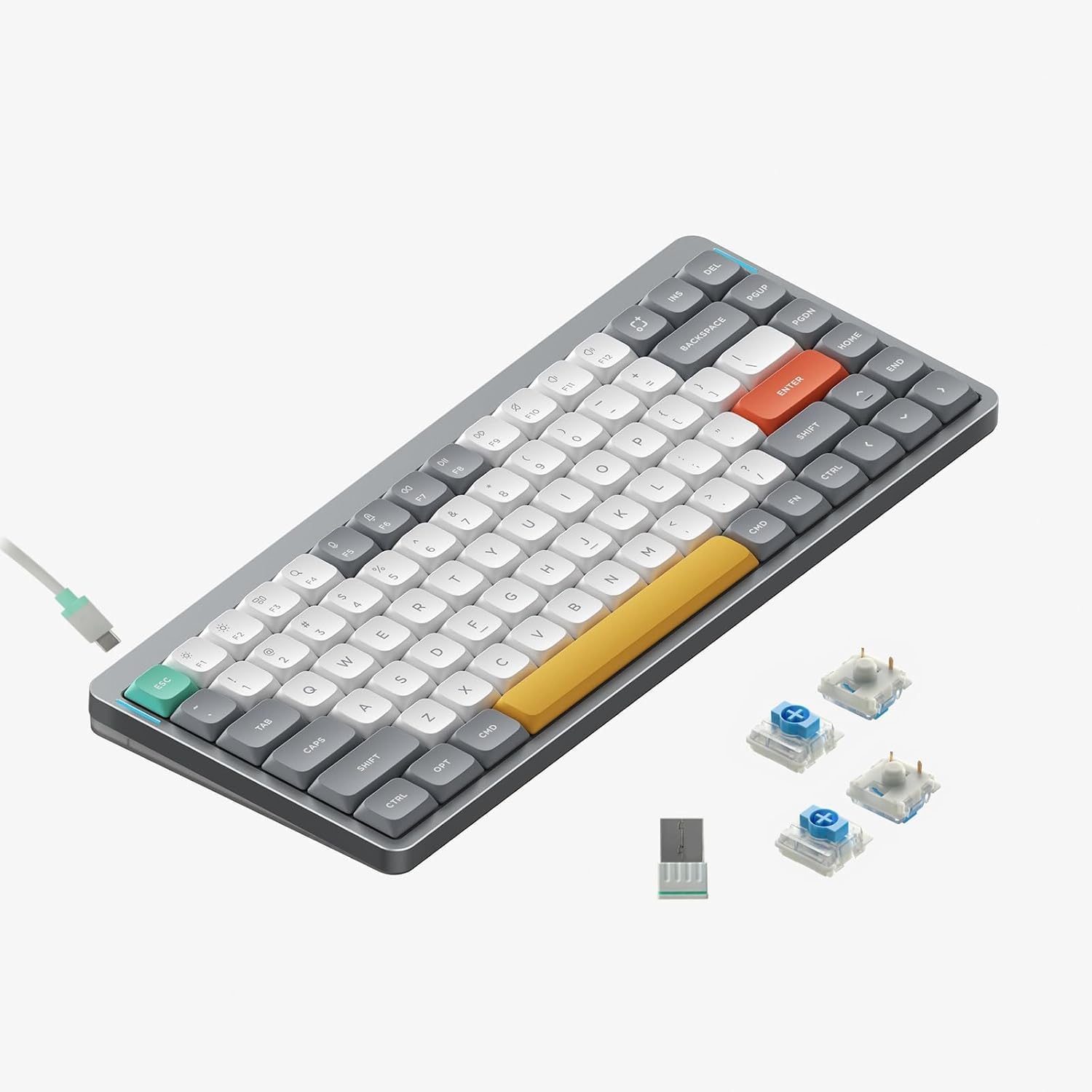
The NuPhy Air75 V2 is an exceptional low-profile mechanical keyboard designed for programmers who move between a home office, a campus lab, or a remote workspace. Encased in a premium slim aluminum frame with a sleek translucent bottom shell, it offers seamless tri-mode connectivity supporting up to 4 devices simultaneously across Windows, Mac, and Linux. It comes out of the box with durable, fade-resistant double-shot PBT keycaps and hot-swappable switch sockets. Driven by an advanced 4000mAh battery cell, it powers through up to 220 hours of coding with the RGB lightbars off. Furthermore, it completely realizes its hardware potential with full open-source QMK/VIA support, enabling endless key remapping and macro profiles.
Optimized for high-speed terminal compilation.
Hardware Spec Analytics
Swipe horizontally to view angles
NuPhy Air75 V2
- ✅ Pros: Incredible low-profile travel form factor, native QMK/VIA support, high-end PBT keycaps.
- ❌ Cons: Slim switches have less travel distance than full-height mechanical boards.
2. The Heavyweight Custom Masterpiece: Keychron Q1 Max
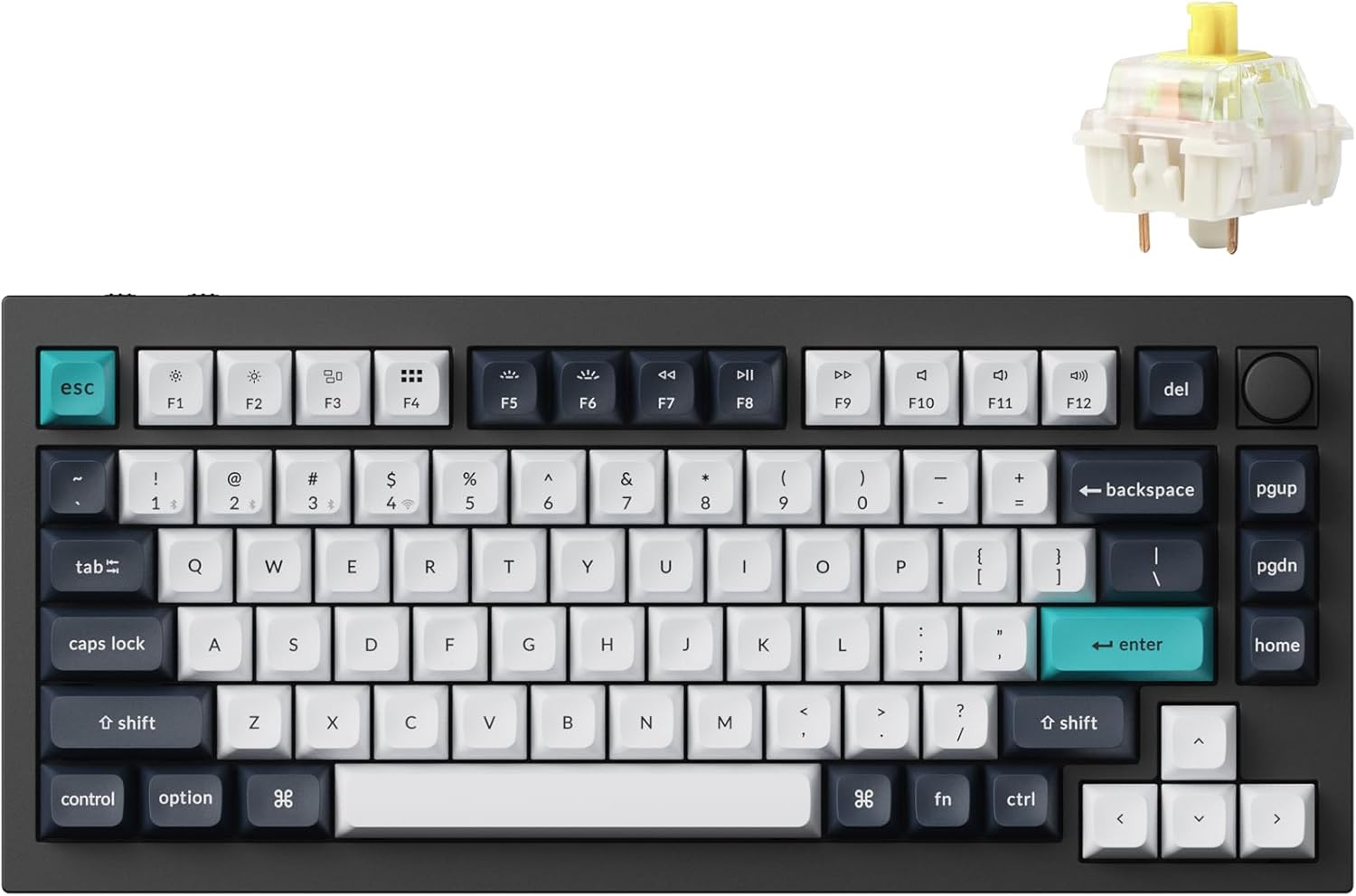
For developers demanding an unyielding, high-end desk command center, the Keychron Q1 Max is an absolute work of art. The entire body is structurally crafted from 6063 solid aluminum that undergoes 24 manufacturing stages, including CNC machining, polishing, and sandblasting. Under the hood, a powerful ARM Cortex-M4 chip with 256K Flash provides massive memory flexibility for intricate developer layouts. It features a unique double-gasket acoustic mounting setup paired with internal sound-absorbing foam, making every single switch actuation incredibly clean and deeply satisfying. Boasting hot-swappable 3-pin/5-pin configurations and a full 1000Hz polling rate over a 2.4GHz wireless highway, it delivers zero noticeable input latency during heavy compilation tasks.
Premium enthusiast-grade aluminum frame execution.
Hardware Spec Analytics
Keychron Q1 Max
- ✅ Pros: Stunning full aluminum CNC build, QMK/VIA memory flexibility, elite acoustic dampening.
- ❌ Cons: High price tag and extreme weight makes it strictly a stationary desk keyboard.
3. The Sound-Optimized Powerhouse: Epomaker TH80 Pro
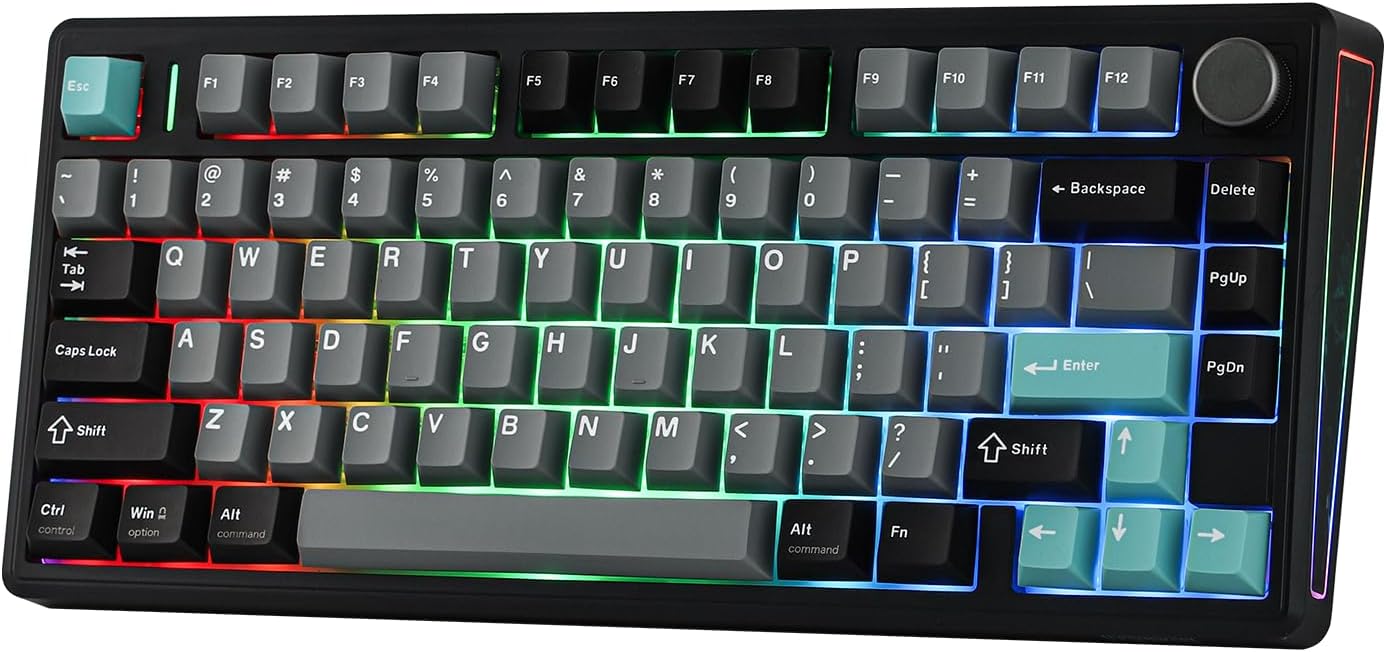
The Epomaker TH80 Pro (V2) is a spectacular 75% mechanical setup that brings the ultra-satisfying 'creamy' hobbyist sound directly into a budget-friendly production workspace. This keyboard is an absolute endurance champion, packed with a massive 8000mAh internal battery cell that easily delivers over 200 hours of continuous use on a single charge. Its multi-layered sound-absorbing interior uses high-grade PORON, IXPE, and silicone dampeners to completely eliminate case pinging and hollow rattling. The hot-swappable design allows you to pop in different switches effortlessly, while the thick, double-shot PBT keycaps maintain a clean, texture-rich surface that resists finger oil shine over months of heavy typing.
Incredible value entry with unmatched power cell storage.
Hardware Spec Analytics
Epomaker TH80 Pro
- ✅ Pros: Massive 8000mAh battery, amazing out-of-the-box creamy acoustics, built-in volume knob.
- ❌ Cons: Proprietary software isn't as robust or open as standard QMK/VIA.
Unsure whether to link your new programming board via a USB dongle or native pairing? Read our deep-dive technical breakdown of Bluetooth vs. 2.4GHz wireless protocols.
The Final Verdict: Who Wins?
Get the NuPhy Air75 V2 if:
- You are an agile developer who changes locations frequently and requires a lightweight, programmable low-profile deck with outstanding cross-platform support.
Get the Keychron Q1 Max if:
- You want an absolute tank of a keyboard with a premium full-metal chassis, advanced acoustic foam engineering, and massive processor memory for custom layouts.
Get the Epomaker TH80 Pro if:
- You want an elite, sound-dampened 'creamy' typing experience out of the box with an industry-leading 8000mAh battery life.
Frequently Asked Questions
Why do programmers heavily prefer 75% layouts over full-sized keyboards?
The 75% form factor preserves the core alphanumeric cluster, arrow keys, and the dedicated top function row (F1-F12) crucial for IDE shortcuts, while cutting out the bulky number pad to position your mouse closer to your body for healthy ergonomics.
What are QMK and VIA, and why do they matter for development?
QMK is an open-source keyboard firmware, and VIA is its visual configuration interface. They allow you to remap any key on your board or build deep multi-layered macro profiles that execute complex sequences with a single press.
Karim
Wireless desk enthusiast and mechanical keyboard obsessive. I test, review, and tear down tech to help you build the perfect, clutter-free setup.